
Law firm digital transformation rarely happens the way vendor decks describe it.
There is no clean before and after moment. No overnight switch. No firm wide rollout where everyone suddenly works faster, smarter, and happier.
In reality, law firm digital transformation happens quietly, unevenly, and often accidentally. It starts inside everyday workflows. It spreads through habits. And it succeeds or fails based on whether the work actually feels easier for lawyers.
This article explains how digital transformation in law firms really happens, why so many initiatives stall, and what firms can do differently to make change stick.
Table of Contents
- Digital Transformation Does Not Start With Technology
- The First Changes Are Usually Invisible
- Lawyers Adopt Tools That Reduce Decisions
- Transformation Happens One Workflow at a Time
- Training Fails When It Is Abstract
- Adoption Spreads Socially, Not Top Down
- Sustainable Transformation Feels Boring
- Conclusion
- FAQs
Law Firm Digital Transformation: How It Actually Happens





Digital Transformation Does Not Start With Technology
Most law firms believe transformation starts when they buy a new system.
It does not.
It starts when existing workflows break often enough that people are ready for change.
Digital transformation only gains momentum when lawyers feel friction in their daily work. Not in theory. In real drafting, reviewing, and collaboration moments.
Why this matters
If a tool is introduced before pain is felt, it becomes optional. Optional tools never transform anything.
Key takeaway
Transformation begins with workflow pain, not product selection. Check out our blog on tips that every lawyer should know.
The First Changes Are Usually Invisible
The earliest signs of digital transformation are subtle.
- Fewer manual fixes
- Fewer formatting checks
- Fewer workarounds passed between colleagues
These changes do not show up on dashboards. They show up in calmer drafting sessions and faster handoffs.
Most successful transformations start with small improvements that reduce anxiety and cognitive load.
Why this matters
When early wins feel personal, adoption spreads naturally.
Key takeaway
Invisible efficiency gains matter more than visible features.
Lawyers Adopt Tools That Reduce Decisions
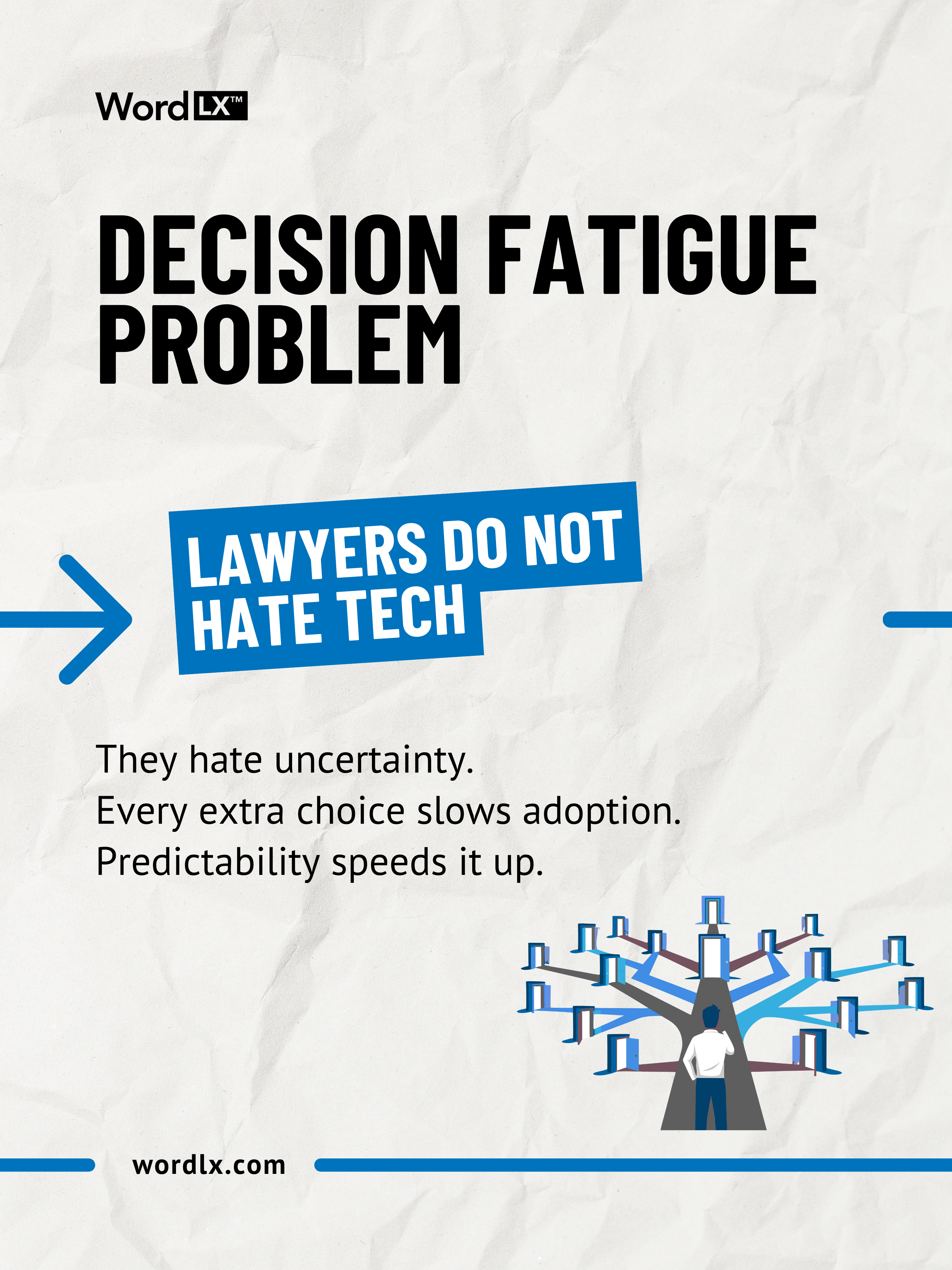
Lawyers do not resist technology. They resist uncertainty.
Tools that add options, choices, and configuration slow adoption. Tools that remove decisions accelerate it.
Successful digital transformation tools do three things consistently:
- They create predictable structure
- They reduce the need to think about mechanics
- They let lawyers focus on substance
Why this matters
Every avoided decision preserves mental energy for legal judgment.
Key takeaway
Decision reduction drives real adoption.
Read our blog on the 7 Best Practices for Legal Document Creation
Transformation Happens One Workflow at a Time
Law firms do not transform all at once.
They transform document by document. Matter by matter. Practice group by practice group.
The firms that succeed focus on stabilizing specific workflows first:
- Drafting
- Clause reuse
- Review cycles
- Document handoffs
Each stabilized workflow becomes proof that change works.
Why this matters
Large scale change only works when built from reliable micro improvements.
Key takeaway
Fix workflows before expanding platforms.
Training Fails When It Is Abstract
Most training fails because it is disconnected from real work.
Effective transformation training is:
- Contextual
- Embedded in live documents
- Focused on removing friction
Lawyers learn fastest when tools solve the problem in front of them, not hypothetical scenarios.
Why this matters
Training that saves time gets repeated. Training that feels theoretical gets ignored.
Key takeaway
Training must live inside the workflow.
Read why training alone won’t drive system adoptions
Adoption Spreads Socially, Not Top Down
Transformation rarely spreads because leadership mandates it.
It spreads because someone says, “This saved me time.”
Peer validation matters more than executive sponsorship once tools reach daily use.
Why this matters
Law firms are trust based environments. People follow what works for their colleagues.
Key takeaway
Social proof beats policy every time.
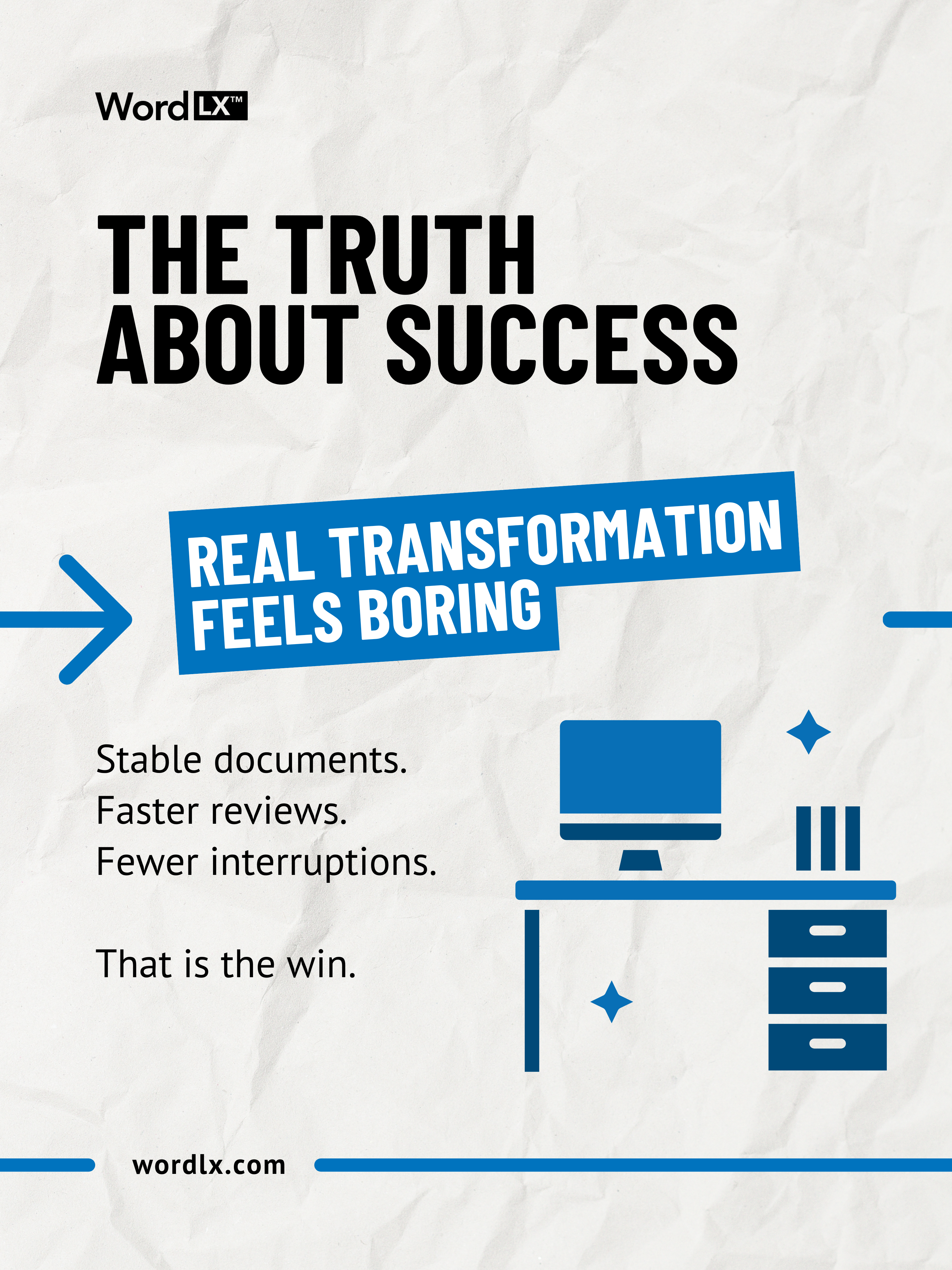
Sustainable Transformation Feels Boring
The most successful digital transformations do not feel revolutionary.
They feel stable.
- Documents behave predictably
- Reviews move faster
- Fewer things break
When workflows stop demanding attention, transformation is complete.
Why this matters
If transformation feels dramatic, it usually is not finished.
Key takeaway
Stability is the real success metric.
Conclusion
Law firm digital transformation does not fail because lawyers resist change.
It fails when tools do not respect how legal work actually happens.
Transformation succeeds when it:
- Reduces friction
- Removes decisions
- Stabilizes workflows
- Earns trust quietly
The firms that win are not chasing innovation. They are building foundations that do not break.
FAQs
-
What is law firm digital transformation?
- Law firm digital transformation is the process of improving legal workflows using technology that reduces friction, improves consistency, and supports how lawyers actually work.
-
Why do law firm digital transformation projects fail?
- They fail when tools are introduced without addressing real workflow pain or when adoption adds complexity instead of reducing it.
-
How long does digital transformation take in a law firm?
- It happens gradually. Most successful transformations occur through small workflow improvements over time rather than large one time rollouts.
-
What makes legal technology adoption successful?
- Tools succeed when they reduce decisions, stabilize documents, and integrate directly into daily drafting and review work.