
The hidden costs of fixing it later in law firms rarely show up on time sheets or reports. Yet this habit quietly drains productivity every day. When lawyers defer document cleanup, formatting corrections, or structural fixes, they are not saving time. They are borrowing against future focus, billable hours, and confidence.
In many law firms, Microsoft Word issues are treated as minor annoyances that can be handled later. But the longer problems sit inside a document, the more expensive they become. What starts as a small workaround often turns into repeated rework, slower reviews, and growing frustration across teams. Also check out our How to Run a Microsoft Word Audit at Your Law Firm
This article explains why fixing it later costs law firms more than they think and what firms can do to stop the cycle.
Table of Contents
- Why “Fixing It Later” Becomes the Default
- The Compounding Cost of Deferred Fixes
- The Hidden Review Tax
- Cognitive Load and Mental Fatigue
- How “Fixing It Later” Hurts the Entire Firm
- How Law Firms Can Break the Cycle
- Final Thoughts
- FAQs
Why “Fixing It Later” Costs Law Firms More Than They Think






Why “Fixing It Later” Becomes the Default
Familiarity Creates False Comfort
Microsoft Word feels safe because it is familiar. Lawyers have learned to live with quirks like shifting spacing, broken numbering, or unstable styles. Over time, these problems feel manageable enough to postpone.
The logic sounds reasonable in the moment. Get the draft done. Fix formatting later. Clean it up before sending.
But documents are rarely touched only once.
Short Term Speed Wins Feel Efficient
In the middle of drafting, stopping to fix structure feels disruptive. Lawyers push forward to maintain momentum. The intention is good. The outcome is not.
Deferred fixes accumulate. Each new edit compounds the original issue and makes later cleanup more complex and time consuming.
The Compounding Cost of Deferred Fixes
Small Problems Multiply With Every Edit
A formatting issue that exists early in a document does not stay isolated. As clauses are added, removed, or moved, the issue spreads.
Common examples include:
- Numbering that breaks across sections
- Styles that behave differently in different parts of the document
- Spacing inconsistencies that require manual correction
- Cross references that no longer point correctly
Each new change increases the cleanup required later.
Cleanup Takes Longer Than Prevention
Fixing a document at the end is slower than fixing issues as they arise. By the time cleanup happens, the context of earlier decisions is lost. Lawyers must reread, reorient, and test changes carefully to avoid breaking something else.
What could have been a small fix becomes a risky operation.
The Hidden Review Tax
Review Cycles Get Slower
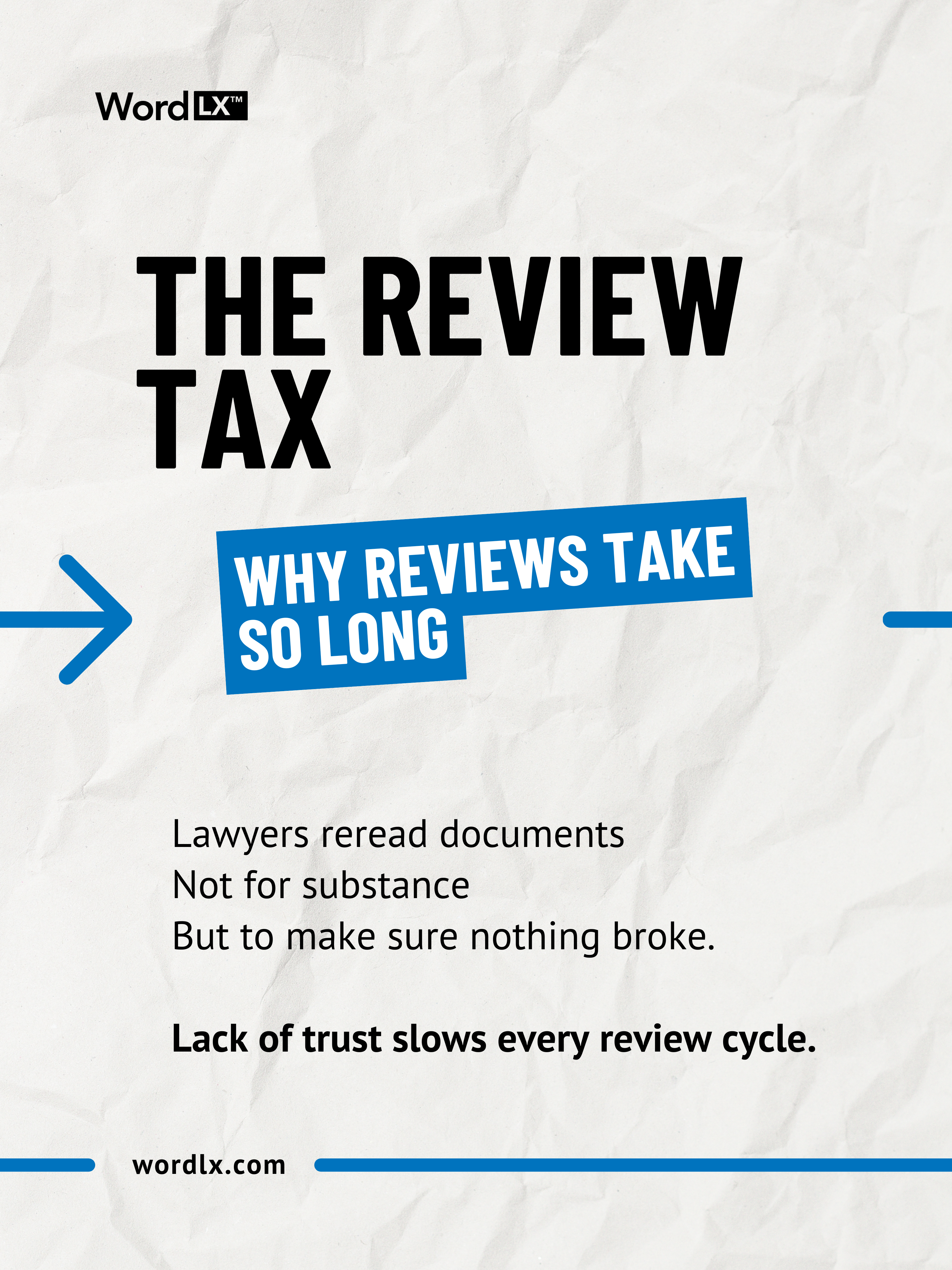
When documents are unstable, reviewers slow down. They read defensively instead of confidently.
Reviewers spend time:
- Checking whether changes caused unintended shifts
- Verifying numbering and references
- Scanning for formatting errors instead of substance
This adds time to every review pass.
Quality Checks Become Mandatory
Many lawyers perform full document rereads not because they want to, but because they do not trust the workflow that produced the draft.
This creates a hidden tax on senior lawyers who should be focusing on judgment, strategy, and client value.
Check out our post on Hidden Costs of Microsoft Word Workflows in Law Firms
Cognitive Load and Mental Fatigue
Deferred Fixes Increase Mental Overhead
Unresolved issues stay in the back of a lawyer’s mind. They hesitate before making changes. They avoid certain sections. They work around known problems instead of addressing them.
This mental load slows drafting and increases stress.
Check out this research on constant task switching and cognitive load.
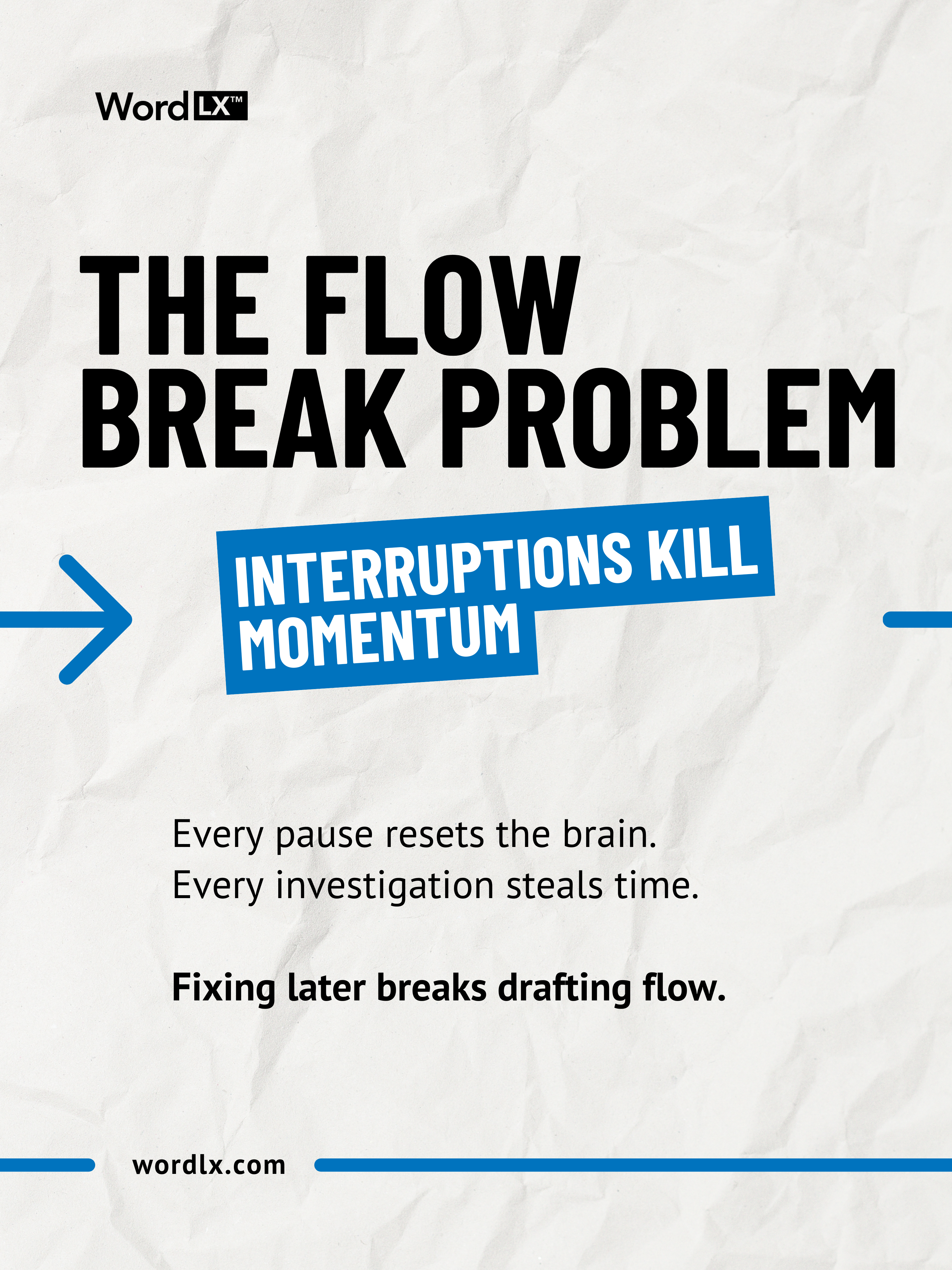
Flow Is Broken Repeatedly
Every time a lawyer stops to investigate or undo a workaround, drafting flow breaks. Regaining focus takes time. Multiply this across a document, a deal, or a week, and the cost becomes significant.
Check out this research on cognitive load theory.
How “Fixing It Later” Hurts the Entire Firm
Inconsistent Workflows Spread
When fixes are deferred, each lawyer develops personal coping strategies. These habits differ across teams and practice groups.
The result:
- Inconsistent document quality
- Harder collaboration
- Longer onboarding for new lawyers
- Difficulty implementing firm wide improvements
Problems Scale With Firm Growth
What feels manageable at a small firm becomes unmanageable as teams grow. More contributors means more edits, more versions, and more opportunities for deferred issues to explode.
Fixing it later does not scale.
How Law Firms Can Break the Cycle
Address Issues at the Source
The most effective way to reduce hidden costs is to prevent instability in the first place. This requires workflows and tools that create predictable document structure from the start.
Reduce the Need for Cleanup
When documents behave consistently, lawyers spend less time fixing and more time drafting. Review cycles shorten. Confidence increases.
Standardize How Work Gets Done
Firm wide consistency reduces rework and improves collaboration. Lawyers can trust documents created by others and focus on substance instead of mechanics.
See our post on the Top 7 Best Practices for Legal Document Creation
Where Word LX Fits In
Word LX is designed to eliminate the conditions that make fixing it later necessary. It strengthens document foundations, reduces repetitive work, and supports predictable drafting across the firm.
By addressing structural issues before they reach lawyers, Word LX helps firms avoid the hidden costs that accumulate over time.
Final Thoughts
Fixing it later feels like a shortcut. In reality, it is one of the most expensive habits in law firms.
Deferred fixes slow drafting, lengthen reviews, increase mental load, and quietly drain billable time. The costs are real, even if they are rarely tracked.
Firms that invest in better document workflows do not just save time. They improve quality, confidence, and consistency across the entire organization.
FAQs
-
Why does fixing document issues later cost more time?
- Because problems compound as documents evolve. Each edit increases the complexity of cleanup and the risk of breaking something else.
-
Why do lawyers delay fixing Word issues?
- To maintain drafting momentum. However, this short term gain often leads to longer cleanup and review cycles later.
-
How does deferred cleanup affect review cycles?
- It slows them down. Reviewers spend time verifying structure and formatting instead of focusing on substance.
-
What types of issues are most expensive to fix later?
- Structural problems like numbering, styles, cross references, and formatting inconsistencies that spread throughout a document.
-
How can law firms reduce the need for fixing it later?
- By using tools and workflows that create predictable document structure from the start and reduce manual fixes.